Dry Brining
Published How we research
Dry brining means salting meat ahead of time and letting it rest, often uncovered, in the fridge. Salt first draws moisture to the surface, then dissolves into a brine that gets reabsorbed, carrying seasoning deep into the meat while changing proteins to hold more moisture during cooking. This seasons meat throughout and dries the surface for crisper skin or a better crust. Timing scales with cut size: forty minutes to overnight for steaks, a day or two for whole birds. Use coarse kosher salt for even distribution. Compared to wet brining, dry brining takes less space, makes no mess, and doesn't dilute flavor with added water. Dry brining is one of the highest-impact, lowest-effort techniques you can add to your cooking. It simply means salting meat well ahead of cooking and letting it rest, often uncovered, in the refrigerator. Despite its simplicity, it transforms flavor, texture, and juiciness, and for many cooks it has replaced the messier wet brine entirely.
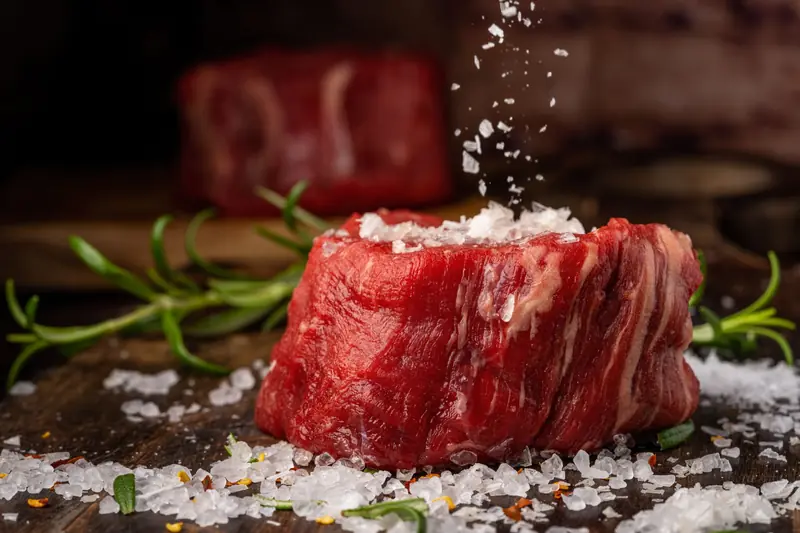
The process relies on how salt interacts with meat over time
The process relies on how salt interacts with meat over time. At first, salt draws moisture to the surface. Given a little while, that moisture dissolves the salt into a concentrated brine, which is then reabsorbed back into the meat, carrying seasoning deep below the surface. Along the way, the salt gently changes the muscle proteins so they hold on to more moisture during cooking.
The result is meat seasoned all the way through
The result is meat that is seasoned all the way through rather than just on the surface, and that stays juicier even if you slightly overcook it. Just as valuable, leaving the meat uncovered in the fridge dries the surface, which is exactly what you want for crisp poultry skin and a deep, browned crust on steaks and roasts.
Timing depends on the size of the cut
Timing depends on the size of the cut. A steak or chops can be dry brined for anywhere from forty minutes to overnight; even a short brine helps, but longer is better up to a point. Larger cuts and whole birds benefit from a day or even two in the fridge. Salt the meat evenly on all sides, then set it on a rack over a tray so air can circulate.
Use coarse salt and a measured hand
Use coarse salt and a measured hand. Kosher salt is popular because its larger grains are easy to distribute evenly and harder to over-apply. Season as if you were salting the finished dish, remembering that most of the salt ends up in the meat rather than washed away as it would be with a wet brine.
Dry brining beats wet brining for most everyday cooking
Compared to wet brining, dry brining takes less space, makes no mess, and does not dilute the meat's flavor with added water. There is no bucket of saltwater to manage and no waterlogged texture to fight. For most everyday grilling and roasting, a simple sprinkle of salt hours ahead of time is the easiest upgrade you can make.
Frequently asked questions
What is dry brining? Salting meat well ahead of cooking and letting it rest, often uncovered, in the refrigerator, so the salt draws out moisture, dissolves into a brine, and gets reabsorbed deep into the meat.
How long should you dry brine a steak? Anywhere from forty minutes to overnight; even a short brine helps, but longer is generally better up to a point, while larger cuts and whole birds benefit from a day or two.
Why does dry brining make poultry skin crispier? Leaving the meat uncovered in the fridge dries the surface, which is exactly what you want for crisp poultry skin and a deep, browned crust on steaks and roasts.
Is dry brining better than wet brining? For most everyday grilling and roasting, yes, since it takes less space, makes no mess, and doesn't dilute the meat's flavor with added water compared to a bucket of saltwater brine.
Popular right now
- Best Vertical Pellet Smokers for Big-Batch BBQ (2026)Buying guide
- Flare-up explainedGlossary
- Best Kettle Grills for Classic Charcoal Cooking (2026)Buying guide
- Best Charcoal Baskets (2026)Buying guide
- Best Kamado Grills for Versatile Outdoor Cooking (2026)Buying guide
- How to Smoke a Turkey for ThanksgivingArticle
Based on the last 28 days of search and visitor data.