The Science of the Smoke Ring in Barbecue
Published How we research
The smoke ring is one of barbecue's most recognizable trophies: that band of pink just beneath the surface of a beautifully smoked brisket or rack of ribs. Many people assume it is proof of skill or flavor, but the truth is more chemical than culinary. The ring is the result of a specific reaction between gases from the fire and the pigment in the meat.
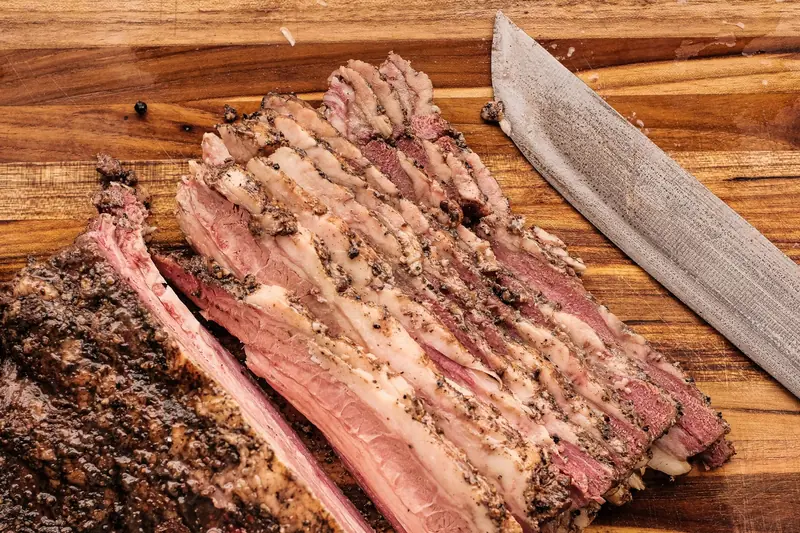
When wood or charcoal burns, it produces nitric oxide and carbon monoxide. These gases dissolve into the moist surface of the meat and penetrate a short distance inward. There they react with myoglobin, the pigment responsible for meat's color, and fix it in a stable pink or red state instead of letting it turn brown as fully cooked meat normally would.
The ring only forms to a certain depth because the reaction depends on the gases reaching the myoglobin before the meat's interior gets too hot. Once the surface layers climb past a certain temperature, the myoglobin can no longer react in the same way, so the pink band stops advancing. That is why the ring is a thin, defined layer rather than a gradient running deep into the meat.
Several conditions encourage a deeper ring. A moist meat surface helps the gases dissolve, so keeping the surface damp early in the cook matters. A lower cooking temperature gives the reaction more time before the meat sets. And the fuel matters too, since burning wood and charcoal produce more of the relevant gases than a purely electric or gas heat source.
Here is the part that surprises people: the smoke ring does not actually taste like anything. It is a visual byproduct of the chemistry, not a measure of smoke flavor. You can even produce a fake ring with certain treatments, and a delicious piece of barbecue can have little or no visible ring at all.
So enjoy the smoke ring as a pleasant sign that your fire was doing its work, but do not chase it at the expense of what really matters: tenderness, moisture, bark, and balanced smoke flavor. A great cook is measured by how it eats, not by the color of a band under the surface.
Popular right now
- Best Vertical Pellet Smokers for Big-Batch BBQ (2026)Buying guide
- Flare-up explainedGlossary
- Best Kettle Grills for Classic Charcoal Cooking (2026)Buying guide
- Best Charcoal Baskets (2026)Buying guide
- Best Kamado Grills for Versatile Outdoor Cooking (2026)Buying guide
- How to Smoke a Turkey for ThanksgivingArticle
Based on the last 28 days of search and visitor data.